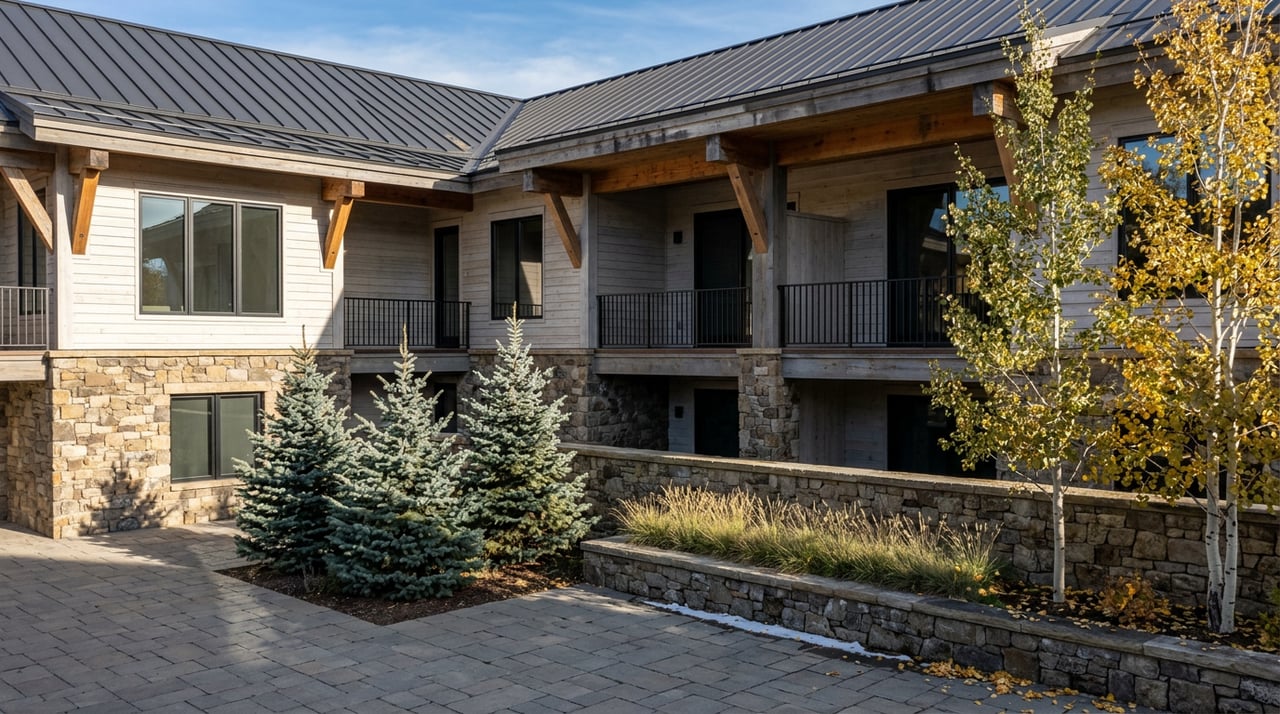
In Breckenridge, the Short-Term Rental License Doesn't Come With the House
September 24, 2026
September 24, 2026
A Breckenridge listing that leads with strong nightly rental numbers is telling you something true and something incomplete at the same time. The income is real. The seller earned it. What the listing can't promise is that you will be allowed to earn it too, because the Town of Breckenridge says the short-term rental license attached to that property belongs to the person selling it, not to the address.
This can catch buyers off guard. A rental history, seller disclosures, and an inspection do not establish whether a new owner can get a short-term rental license. After closing, the new owner may need to apply.
Breckenridge's short-term rental licensing system is administered by the Town's Finance Department. That license is non-transferable. When a licensed short-term rental sells, the license is relinquished, and the new owner has to apply fresh.
Practically, this means a listing describing years of strong occupancy is describing the seller's legal standing, not a guarantee that transfers with the keys.
The Town of Breckenridge divides the town into four short-term rental zones, and where a property sits inside those boundaries matters more to a rental-income buyer than square footage, finish level, or even price. Here's how the current rules differ by zone:
SkyRun's guide describes the Resort Zone as covering condominium and hotel complexes built specifically for short stays, including One Ski Hill Place, Beaver Run, and Crystal Peak Lodge.
The Town of Breckenridge reports 467 licenses still available in Zone 1, with no waitlist. Zone 2 is the downtown core along Main, Ridge, and French Streets.
Zone 3, the single-family residential ring around town, is the clearest example of why the license mechanism matters more than the sale price. The town set a cap of 390 licenses there to protect neighborhood housing stock from tourism pressure. Roughly 1,000 licenses were grandfathered in.
A buyer who falls in love with a Zone 3 home because the current owner runs it as a thriving weekend rental is, in effect, buying the house and not the business. The rental income disappears at closing.
A second wrinkle catches buyers who assume a Breckenridge mailing address means Breckenridge's rules apply. Well-known areas like Peak 7 and the base of Peak 8 carry Breckenridge addresses, so check the rules for the specific parcel rather than assume from the neighborhood name.
Two small pockets add to the confusion in the other direction. The Four O'Clock Subdivision and SkiWatch Condos read as part of town on a map, so check the applicable rules for the specific parcel rather than assume from the map.
Blue River, just south of Breckenridge along Highway 9, is a nearby town with its own local rental rules.
The lesson for anyone shopping the wider Summit County market is to treat rental rules as local policy that may be revisited, and to check the current rules before making an offer.
A few checks take less time than a single showing and can save months of confusion later:
Can I get on the waitlist before I close? No. Only the current deed holder can apply for a license or join a waitlist.
Does a strong rental history from the current owner mean anything for my application? It confirms the property type performs well as a rental, which is useful information. That history can help you assess the property's rental potential, but it does not guarantee that the same income will continue under a new owner.
Rental income can absolutely be part of a smart Breckenridge purchase. The properties that can be licensed today, particularly in Zone 1, continue to see strong demand precisely because that certainty is rare. Getting there starts with treating the zone as part of the property's fundamentals, not a footnote to check after the offer is already in.
If you're weighing a Breckenridge property with rental income as part of the plan, Lindblom Groupe can walk through the zone, the current waitlist status, and what the numbers actually look like before you write an offer. Contact Us.
This article is general information, not legal, tax or financial advice. Consult a qualified professional about your situation.



Scott and Anne provide a concierge-style of real estate agent services to our clients seeking to buy or sell luxury homes, mountain homes, condominiums, or land. Our success is based on our clients’ satisfaction, which is achieved through effective communication, exceeding expectations, and demonstrating the highest ethical standards. Each of our clients is treated with the utmost discretion and professionalism. These qualities lead to executing professional transactions and strong relationships with our clients.