Montgomery Reservoir Was Never Supposed to Stay This Size
September 17, 2026
September 17, 2026
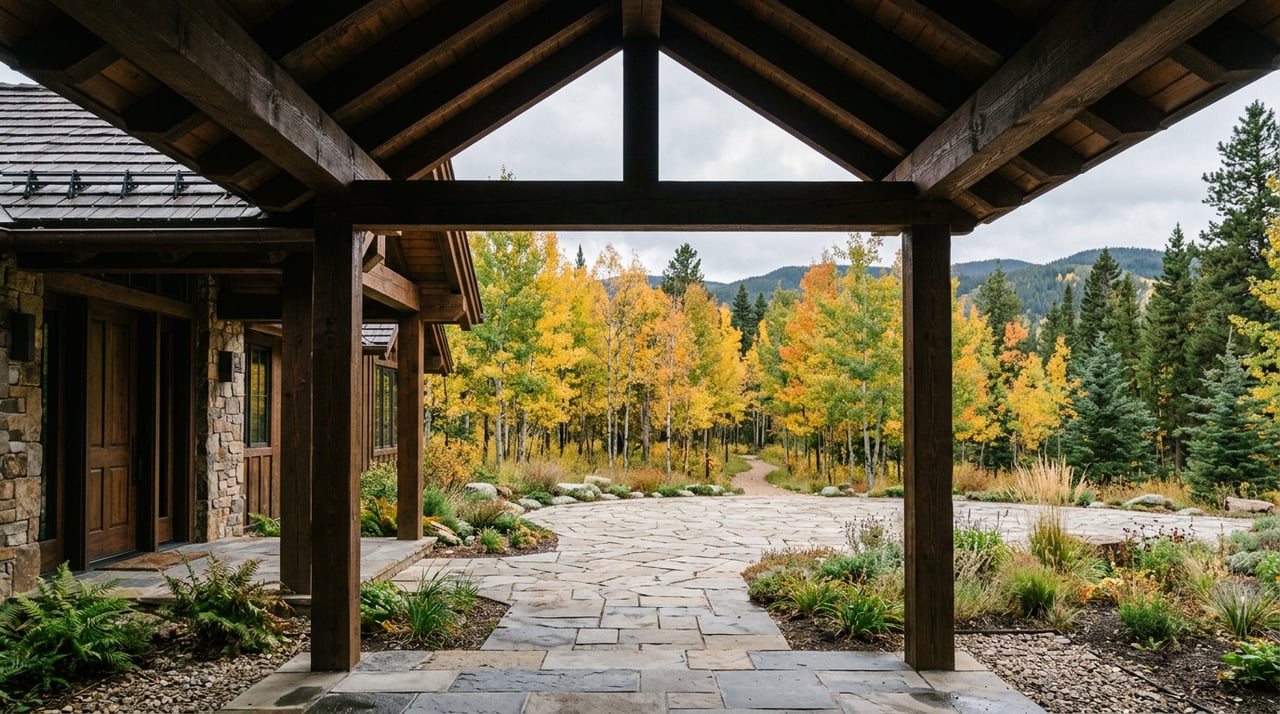
Ten minutes north of town, past the turn where County Road 4 peels off Highway 9, the water sits quiet against the Mosquito Range the way it has for most of a lifetime. Anglers work the north and west shorelines for stocked rainbow and brook trout. Hikers loop the flat trail on the southeast side or push further to Wheeler Lake. In fall, a handful of photographers make the walk out to the ruins of the Magnolia Mill at the inlet, where a waterfall drops behind the old timber frame and the aspens along the Middle Fork of the South Platte turn gold around it. It feels like a fixed point on the map, the kind of place that doesn't change because there's no reason for it to.
That's the part locals have wrong. Montgomery Reservoir was built in 1957 with room to grow, and the growing is about to start.
Colorado Springs Utilities has confirmed what it plans to do: take the reservoir from its current 5,699 acre-feet of capacity to roughly 13,799 acre-feet, more than doubling what's held behind the dam. The utility says the added storage translates to about 4,000 acre-feet of additional average annual yield, enough by its own estimate to supply at least 12,000 Colorado Springs families with water for a year. None of this is new appetite. Enlargement was part of the original engineering when the reservoir was constructed as part of the Continental-Hoosier System, the tunnel-and-pipeline network that moves water from the Blue River watershed under the Continental Divide to Colorado Springs. The system is nearly 70 years old and was designed, from the start, to eventually hold more than it does today.
What changed isn't the plan. It's the timing.
On April 9, 2026, Colorado Springs Utilities held a community meeting at Alma Town Hall on Buckskin Street to walk residents through what's coming. Maria Pastore, the utility's water resource planner, told CBS Colorado that the agency understands how much the area matters to the people who use it.
"Those public benefits, the hiking, the fishing, off-road access, those will all remain the same once construction is complete," Pastore said.
The qualifier in that sentence is doing real work. Once construction is complete. Before that point, the reservoir has to be drained for parts of the work, and Colorado Springs Utilities is already coordinating with Colorado Parks and Wildlife on a fish salvage effort ahead of that drawdown, according to the project's own public FAQ. Access to the reservoir and the U.S. Forest Service land behind it will be restricted during active construction, and whether winter recreation in that area continues during the build is still being worked out, not yet decided.
The utility's own project page lists a sequence: 2026 for federal, state, and local permit applications, 2027 into 2028 for permitting decisions, and construction running from 2029 into 2032. A separate FAQ prepared for Park County residents describes construction happening in the summer and fall seasons of 2028 through 2030. The two documents don't line up exactly, which is normal for a project still moving through permitting, but the shape is consistent either way: a multi-year construction window starting somewhere between 2028 and 2029, most likely running three to four seasons.
That means the next two or three autumns at Montgomery Reservoir look like this one. After that, nobody currently knows exactly what a visit looks like, only that it eventually goes back to normal once the dam work wraps.
Here's what the utility says is on the table, based on what's public so far:
The path to this project runs through a 2024 settlement that's easy to miss if you only follow the Alma side of the story. Colorado Springs Utilities had spent close to a decade in water court defending conditional rights tied to three proposed reservoirs on the Western Slope: Lower Blue, Spruce Lake, and Mayflower. Those sites came with their own headaches, including endangered species concerns and construction access across difficult alpine terrain. In February 2024, the utility agreed to give up those conditional rights in exchange for something more useful to it: an agreement from West Slope water providers not to oppose the Montgomery Reservoir enlargement, according to reporting by Aspen Journalism. As part of that deal, Colorado Springs also accepted a hard cap of 13,000 acre-feet per year it can draw through the Hoosier Tunnel, measured as a 15-year rolling average. Current draw through the tunnel runs around 8,500 acre-feet a year, so the cap leaves room to grow into but doesn't hand the utility an open tap.
That trade is why Montgomery, rather than a brand-new reservoir somewhere else, is the project that's actually moving. It was already permitted in spirit decades ago, it already had an easier path through the courts once the West Slope agreement was signed, and it sits on land Colorado Springs already owns and operates.
None of the construction changes anything about the next few weeks. Highway 9 between Fairplay and Alma still runs through one of the more reliable aspen corridors in this part of the state, with the Middle Fork valley lined in gold before the color moves north over Hoosier Pass toward Breckenridge. High-elevation groves above 10,000 feet, which describes most of the terrain around Alma, tend to turn earliest in the season, and this year's dry summer is pushing some of that color change even earlier than usual, with a shorter and possibly less saturated window than a wetter year would produce. The Magnolia Mill, right at the reservoir's inlet, remains one of the better-known spots locally for photographing that shift, with the waterfall behind it as a backdrop.
For anglers thinking ahead past this season, it's worth knowing the fallback options nearby don't depend on the reservoir at all. The Alma State Wildlife Area holds about two miles of public stream access along County Road 4 between the reservoir and town, with resident browns, brookies, and rainbows in the six to fourteen inch range. Kite Lake, five and a half miles northwest of Alma off County Road 8, sits at 12,000 feet with its own campsites and has never been part of this project's footprint.
The version of Montgomery Reservoir everyone in Alma already knows isn't disappearing. It's on a schedule to get bigger, sometime after permitting wraps in the next year or two, over a construction window that will likely run several seasons before the shoreline settles into its new, larger shape. The engineers who poured that dam in 1957 planned for this. It just took most of a century to get here.
If you're weighing a move to this part of Park County, or you already call it home and want a clearer read on how projects like this one shape a neighborhood over time, Lindblom Groupe knows this stretch of Highway 9 as well as anyone working it. Contact us when you're ready to talk through what's happening here, on the ground, beyond what a listing sheet tells you.

Scott and Anne provide a concierge-style of real estate agent services to our clients seeking to buy or sell luxury homes, mountain homes, condominiums, or land. Our success is based on our clients’ satisfaction, which is achieved through effective communication, exceeding expectations, and demonstrating the highest ethical standards. Each of our clients is treated with the utmost discretion and professionalism. These qualities lead to executing professional transactions and strong relationships with our clients.